The Children Who Wave

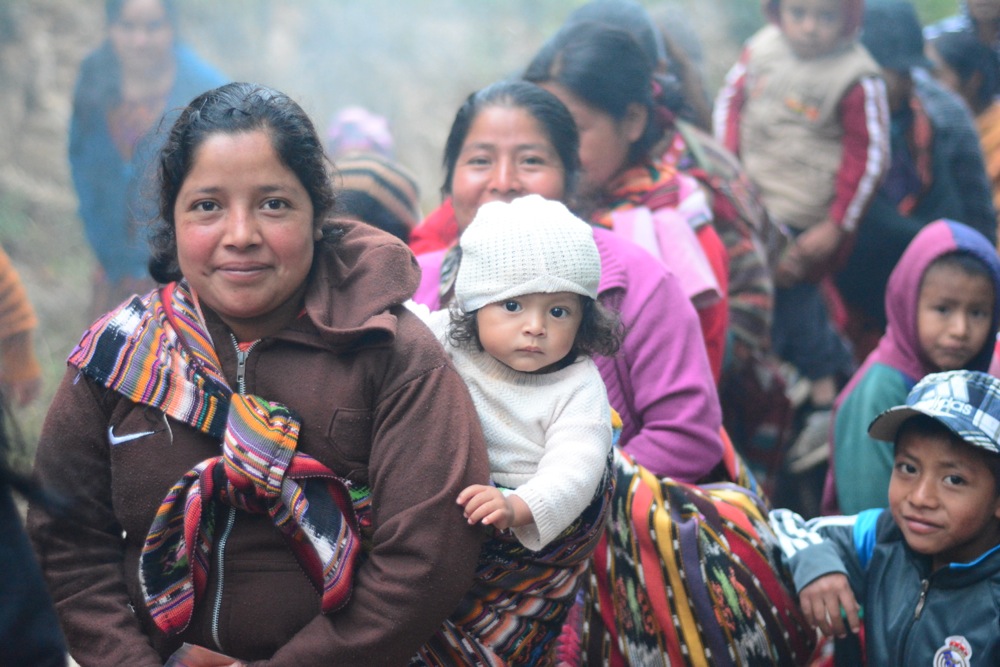
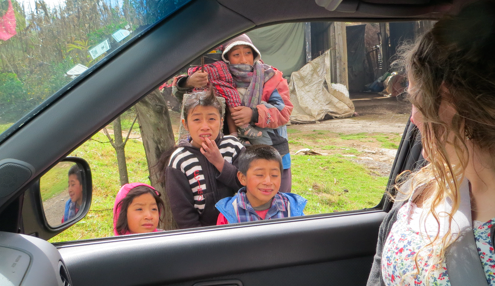
Alongside the highway, children stay warm near fires as they wave at passing cars hoping for a Christmas gift.

Alongside the highway, children stay warm near fires as they wave at passing cars hoping for a Christmas gift.

If you’re ever in Guatemala shortly before Christmas there is a phenomenon that you might not even realize is happening as you drive the PanAmerican Highway (CA-1) through the mountains. Children are found sitting along the highway waving at the cars that go by.

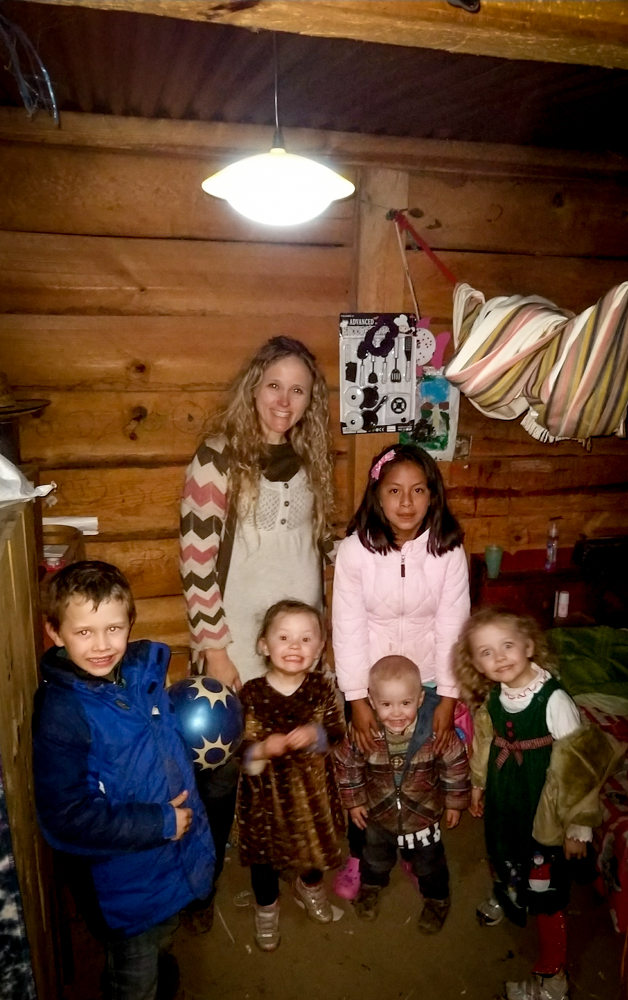
Chrisi is telling the children who wave about the best Christmas gift ever--Jesus! We also gave gifts of rice and beans.

Chrisi is telling the children who wave about the best Christmas gift ever–Jesus! We also gave gifts of rice and beans.

While that seems less than remarkable at first mention, the fact that there are not just a few random children waving at the cars that go by but hundreds and hundreds of them. Some are in small groups of two or five, others are sitting by themselves waving at the passing cars. Others are in groups of 20 or more huddling around blazing fires and turning to wave. In December of 2012, in just under a mile of driving down the curvy mountain roads between Los Encuentros and Tecpan, I counted over 100 children and mothers along the roadside.

After seeing these children who wave last year and again this year, I asked around and the best I could find out is that at some point someone stopped and gave gifts out to some of the kids on the roadside. Apparently, word got around and the legend of the waving children began.

As we planned a trip to the city, Chrisi and I decided that we wanted to do something for these kids. Chrisi picked up 30 pounds of rice and beans in one-pound bags to have them ready for the trip. We also gathered some Christian tracts to share with them.

So, as we started down the mountain, we saw the first group of kids waving at us and we pulled over to their delight. It was a small group, but they rallied around the side of the car as we shared the best Gift ever — Jesus Christ. We asked why they were waving and even had our friend, Juana, ask them in K’iche’ but they didn’t answer. After sharing with them about Christ, we gave them each a bag of rice or beans and a tract and then headed on our way.

The children who wave along the CA-1 highway in Guatemala are lined up to receive a gift.

The children who wave along the CA-1 highway in Guatemala are lined up to receive a gift.

The next group was larger and we shared the Gospel with them and then had them line up to keep things in order. By the end of the line, we had only one bag of rice left. This we gave out to several mothers holding their babies along with some bread and tracts that we had left.

After those three stops we kept moving as we didn’t have any of the rice or beans left nor did we have nearly enough for the groups we saw crowed along the road side.

What an exciting way to make our way to the city: Giving out Christmas food and the Gospel! Next year we need about several hundred pounds of beans and rice when we try this again!

Juan and a Change of Heart

BAREFOOT AND SAD

Juan* grew up outside of Chichicastenango. His parents owned several milk cows and goats. As a boy Juan’s job along with his five brothers and two sisters was to milk the cows, sell the milk to neighbors and scavenge enough food for the cattle to fill their bellies for the night. Each day Juan did this fearing that if he didn’t get enough milk, his mother would beat him or that if the cows were still hungry at night, he would have to wander the dark fields looking for more food to give the hungry cows at 10 o’clock that night.

Juan said he was almost always barefoot. He almost never received money from his parents for a toy or some candy treat. It was a childhood of fear and little love. Once he was given a pair of rubber boots and these were one of his prized possessions. Now it is some 30 years later, and he remembers those rubber boots with a special smile.

When Juan was about six years old, his father became a pastor of a small country church. Sadly, while his father was teaching the people in the church about the Word of God, little changed in the home. Juan said that as he entered his teen years he received almost no advice on what it means to be a man of God or things he should stay away from.

At one point Juan had accepted Christ, but as he describes it now, it was only with his lips not his heart. Juan said he had been sick and someone asked if he wanted to become a Christian so he agreed to this and prayed but he did not allow God to change his heart.

ALCOHOL AND GIRLFRIENDS

As Juan passed 16 years of age, he was soon carousing with friends, seeing five different girlfriends and getting drunk with other young men. Once he and some friends were walking the street drunk when they got into a fight with another man. After they beat the man up, they knew that his friends would chase them so he ran to his father’s church where a meeting was taking place. Soon, their pursuers caught them in the church and tied up Juan and his friends. After giving them a beating, they untied them and threw them into a well to sober them up.

Still Juan didn’t change his way of living. He played soccer as much as he could, and he was well known as being a great player in the stadium in Chichi. He continued to drink and run around. He said that he and his friends would sneak through the cemetery and steal liquor that people left for their ancestor’s spirits during the Day of the Dead.

At about 18 years old, Juan and a young lady named, Olivia,* committed fornication together. A few months later Olivia told Juan she was pregnant.

Juan didn’t know what to do so he left town without telling anyone. Soon he found himself working for a man near the coast still wondering what he should do. All this time, his family didn’t know where he was or why he left. Eventually, the girl’s father visited Juan’s dad and explained that his daughter was pregnant and that Juan was the father.  Things started to make sense, but Juan’s dad still didn’t know where he had gone.

One day, Juan’ dad met a man in the market of Chichicastenango who knew that Juan was working at the coast. Juan soon was standing face to face with his father who traveled all the way to the coast to confront his son.

ANOTHER BAD DECISION

At first, Juan said he left just to find work, but his father told him he knew there was more to it and that he needed to come home.  Finally, Juan agreed to return, but in his mind he decided that he would try to abort the baby to keep from having this “problem” in his life.

When he arrived in his home town, Juan talked with the girl and they agreed to visit a doctor to get an abortion even though they are not only wrong, but also illegal in Guatemala.

At the doctor’s office, the woman doctor talked with the young couple and explained why they shouldn’t get an abortion. Since it is illegal for a woman to get an abortion in Guatemala except if her life is threatened, the doctor explained how Juan could end up in prison if they went through with this. Flustered but determined, Juan and Olivia left the doctors office determined to try another way.

Juan bought some pills and gave them to Olivia to abort the baby, but nothing happened and soon, it was very evident that a baby was on it’s way.

In a quiet legal ceremony, Juan and Olivia got married and their daughter was born. Thankfully, she was a healthy, beautiful baby. Even at this time, Juan had little change of heart or lifestyle. He still drank and when he met his old girlfriends in town they would asked him who was the woman he was with. He told them that she was his sister.

SICKNESS TO SALVATION

After some time, Juan became very sick. This soccer player who it seemed that nothing could stop him, was sick and in his bed for 15 days.

It was lying there on his back that he realized that he couldn’t keep going on like this. He felt that God was using this sickness to give him the chance to change his life. There in his bed, he turned his life over to God and decided to never take it back.

After that, Juan gradually got better and he spent all his spare time in the church serving in one way or another. He kept praying for a job, but stayed busy serving in the church. Eventually, he was asked to help with the youth group at his father’s church. As evidence of his life change continued to be obvious, his old friends asked why he didn’t drink with them or hang out with them any more.

God did answer Juan’s prayer for a job and he got a low wage job at a local ministry where he continues to serve and have income for his family. Olivia now sells things in the local market on Sundays and their family has grown to four children. Now, Juan is training up his oldest daughter and other children to avoid the same mistakes he made and raising them to follow Christ.

How amazing that God saved that little baby, Juan and his entire family and now Juan is training up a new generation of children who will follow Christ.

*Names have been changed to protect identity in this true story.

Conference 2012

screen-shot-2012-04-23-at-4-30-59-pm

Picture 1 of 14

ASELSI‘s annual Leadership Conference was a rousing success.

Over 400 pastors and church leaders from five different countries (mainly alumni of ASELSI’s Bible training programs) were part of this two-day event that focused on preparing attendees for spiritual warfare.

ASELSI founder John Harvey emphasized that Christians are in a spiritual battle and not only recognizing this but taking action is vital.

“Every year we invite all our students to come to Chichicastenango, (Guatemala) to hear teaching they normally wouldn’t hear from great teachers who have been proven throughout the years.” Harvey said.

The diversity of cultures, languages and denominations who attend is quite varied. Harvey said this is something that he really enjoys seeing as many Christians of different backgrounds join together to grow, learn and take what they learn back to their communities.

During the conference, a lively worship band led the crowd in songs and many responded for prayer following the main speaking sessions.

When the crowds began arriving early Friday morning, the ASELSI campus was decorated to look like an encampment preparing for battle. The stage was set to look like the bulwarks for a great castle complete with towers, banners, shields and armor.

Workshops with speakers from various countries kept the message on target. Teachings focused on spiritual battle for family, church, youth and more.

“My heart’s desire is to raise the level of awareness that we are in a battle,” Harvey said. “We are indeed soldiers. We have the authority, and we need to use that authority in every area of our lives.”

The 400 attendees came to Chichicastenango from across Guatemala, Mexico, the U.S., Venezuela, and Ecuador.

Filipe Rivera and his family traveled two and a half hours by bus to come to the conference from the town of Nebaj.

“The conference is a great blessing for us. The times we’ve come here have been edifying for our lives.” Rivera said. “(The teachings from ASELSI) are useful for using with the (church) congregation.”

ASELSI (ASSOCIATION OF EQUIPPING THE SAINTS INTERNATIONAL) has extension training centers in the five nations represented where students are learning to study the Bible and apply what they learn in their homes and ministries. Students can go from a basic elementary level all the way through a high school level. in 2013 ASELSI plans to open college level courses.

Brenda’s Silence

Brenda meets with Dr. Roberts

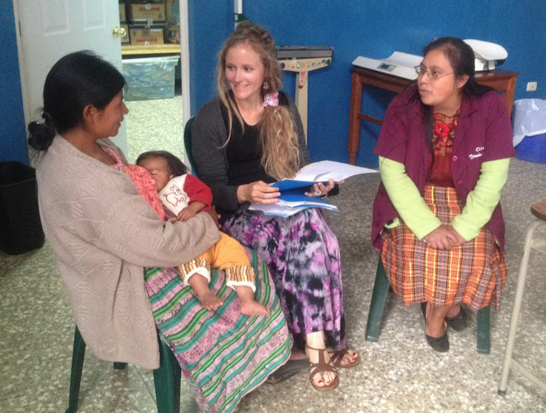
Seven-year-old Brenda rarely speaks. When she does, she uses very few words like “mama” and perhaps a couple other words including her name.

I met Brenda and her mom at a clinic held by a team of Texans at the ASELSI Father’s Heart Clinic a couple weeks ago. As an interpreter for the pediatrician, I helped investigate the back stories of patients and then communicate the correct treatment. Many patients had headaches and pains related not to a physical cause but to the stress of their life situations — financial distress, abandonment, hard labor, and more. It was a reminder that more than medicine is needed here. [Read more...]

Chichi Feeding Program

Praying with shoeshine boys

Picture 1 of 9

In Chichi boys as young as 5 years old prowl the streets carrying what look like little black toolboxes. Their hands are filthy and most of their ragged clothes are a close match. These boys are the shoeshine boys looking for anyone with  leather shoes to shine for as low as two quetzales (about 26 U.S. cents) and as high as they can get foreigners to pay.

Another common site in Chichi are the carriers of heavy things. These men may be as old as well into their 80s, but they are men with strong backs and hard lives hired to carry heavy burdens for shop owners and individuals.

For these boys and men, ASELSI puts on a special feeding outreach in the local central park. Usually this involves sending out a small team to pass out tickets and then returning to the town park with 30 to 60 hamburgers, chips, a drink and some cookies.

Before the sack lunches are passed out, we have some fun songs and then someone shares a testimony of how God changed their life. After a brief presentation of the Gospel we’ll pray for anyone who wants to accept Christ or just needs prayer.

Then it’s lunch time and all the individuals with tickets line up and receive their lunches. The most exciting part of these outreaches is seeing the guys respond to Christ. The hardest part is having to tell those without tickets that we don’t have any more meals to give away.


ASELSI CHRISTMAS PARTY 2011

The line of families waiting to get into the ASELSI Christmas Fiesta 2011

On December 1st I got up early and drove over to ASELSI at 5:45 a.m. It was the big Christmas celebration and the line of guests had been growing since people started camping outside the ASELSI gates at 5:30 p.m. the night before. These Guatemalans really look forward to a party!

With nearly 800 families invited, we were expecting quite the crowd.

I had to park well away from the actual campus because of the crowd that wound it’s way nearly a quarter of a mile down the road. In the pre-dawn twilight smoke was filtering through the trees from the pine needle fires people had started on the road to help keep warm from the chilly night air.

I could hear the clicks and glottal sounds of the K’iche language as they gave the morning greeting of “skerik.” The closest I could get was a friendly Spanish “buenos dias,” but they didn’t seem to mind. I think they were glad to see that morning was finally arriving. For many of them they spent much of the night getting their place in line.

Some of the team members from Gateway Church in Texas were already out walking the line welcoming the people as I set up video equipment to capture the moment so we could share this event with people back in the states. At times the clouds of smoke choked my throat as well as my view, but slowly the twilight gave way to an overcast morning light.

At 6:30 the ASELSI team arrived and finalized preparations to have everything ready for people to hear the Gospel during this Christmas Celebration.

By about 8 a.m. the line was moving as each family checked in and made their way to the waiting area that we normally use for a dusty and hard dirt soccer field on the back side of the campus.

ASELSI CHRISTMAS PARTY CROWD

At 8:30 the seats in the open auditorium were filled with the first of four groups as hundreds of children, accompanied by their parents, older siblings, aunts and uncles watched a clown on the stage with expectation. [Read more...]

How to say “hola” in Guatemala.

The tree covered walk at the cemetery in Totonicapan, Guatemala.

We’re learning a lot here in Guatemala and it’s not just how to speak Spanish. We’re also learning how to interact in our new culture!

Guatemala has a very friendly culture and, similar to many Latin cultures, greetings are handled differently here than we were use to in the States. We discovered this pretty quickly when we were invited to be part of a family gathering for some new friends of ours.

GREETINGS

  • For guys to girls and girls to girls, the greeters give a light  hug and touch cheeks. Usually right cheek to right cheek. As their  cheeks touch they make a slight kissing sound and there you go!
  • Guys to guys give a hand shake or possibly a hug, but usually just a hand shake unless you know them well.

It was a Sunday morning after church a few weeks ago when we packed in their little Toyota and drove up the valley from Quetzaltenango to the village of Totonicapan. We stopped in at the matron of the family’s home and started our greetings. “Grandma” greeted us at the door with the traditional greeting though she actually gave us kisses on the cheek. We went through the whole house greeting everyone with, “Buenos Dias!” and the traditional hugs and air-kisses.

We headed into town  in a local transit bus called a microbus (these inexpensive buses are a great way to get around…and they’re’s always room for one more!).

Friends in Totonicapan

A Sunday afternoon with friends in Totonicapan, Guatemala

Our friends gave us a walking tour of the city and the local cemetery (Cemeteries are local attractions in Guatemala for some reason and some have interesting legends.) then we headed back to the house for lunch.

At the house Chrisi and our new friend Shes, walked in the gate one of the cousins, a 10-year-old boy, ignored Shes and walked straight up to Chrisi and said a bold, “Hello!” He leaned up to give Chrisi a traditional greeting, but turned his head and gave her a big kiss right on the cheek!  Chrisi was caught off guard by this bold youngster and he walked away smiling to obvious amusement of his friends. I missed the whole thing, but with Chrisi as pretty as she is, it’s no wonder to me that this young upstart would want to kiss my bride!

So, while there are unspoken rules and it’s generally O.K. for grandmas and moms to actually give real cheek kisses, you have to be a bit careful with the bold youth who just might take advantage of the “air kiss” and substitute a real one!

Here’s a few more tips for greetings:

WHEN TO SAY WHAT…

  • “Buenos Dias!”      –  From 6 a.m. to 12p.m.
  • “Buenas Tardes!” –  From 12 p.m. to about 6 p.m. or dark
  • “Buenas Noches!” — From about 6 p.m. or dark to when you go to bed.

WHAT NOT TO SAY…

  • It’s “Buenos Dias!”  with the “o” in “Buenos” saying this with an “a” is a typical mistake of new Spanish speakers.
  • You’ll hear it on the streets, but try to avoid just saying, “Buenos!” (Our house mom taught us not to do this. She once incredulously asked, “Buenos? Buenos que?” (“Good? Good what?”)  explaining that you should give the full greeting.


Miguel’s Story: Physical need leads to spiritual hope

Miguel was two when his mother first brought him to the clinic.

Miguel in about 2005

His severely clubbed foot and eye problems made life very difficult for this growing boy, but that first visit in 2002 began a life changing relationship for both Miguel and his family.

Over a matter of four years, Miguel underwent care for his eye condition and his deformed foot was replaced with a prosthetic. With special care and therapy he literally stepped up to his dream of being able to kick a soccer ball like the other kids. The medical team cried the day he kicked a ball for the first time.

Miguel and his mom at the Father's Heart Clinic in 2005

Despite hearing the Gospel in her own language during many clinic visits, Miguel’s mother, Maria, consistently declined accepting Jesus Christ. However, when a short-term mission team visited them in 2008, a team member asked her if she had ever accepted Jesus into her life. Maria said, “No.”But when they asked her if she would like to she said, “Yes.”. That was just the start. That day Miguel’s two sisters, grandmother, and Miguel himself also accepted the Lord! It took four years of caring, but the love of Christ brought new light and life into this family.
In 2010 we saw Miguel, now about 10 years old, standing on his own among other children as they played in the clinic yard. He is doing well.

Here's Miguel with some of his art work in 2010

Pray that more families will accept the healing power of God in their bodies and their hearts.

This is just one example of how ASELI’s Father’s Heart Clinic is making a difference both physically and spiritually in the lives of the Mayan people of Guatemala.

Training the Guatemalan Church

It was late April and the volcanic slopes of Guatemala were dusty green as warm breezes gradually made way for the coming rainy season. Clouds growing in the sky signaled that it wouldn’t be long until fresh rains would water the dry volcanic slopes until they burst into colorful bloom.

For 13 years missionaries John and Sharon Harvey have experienced this cycle of dry and rainy seasons as they’ve shared the Gospel in the Central American nation of Guatemala. Each season they watch more than just flowers bloom as thousands of lives have been saved, pastors trained and children fed through the Asociacion Equipando a Los Santos Internacional (Association for Equipping the Saints International (ASELSI)). This ministry provides physical care and spiritual training to villagers across the remote mountains of northwest Guatemala.

Based in the department (state) of El Quiché, ASELSI includes both medical and Bible training branches.

Sharon Harvey, a registered nurse, organizes medical care for the villagers and trains Guatemalans to provide a much needed milk distribution program to battle the six-percent or higher mortality rate for children below the age of five. In 2004, ASELSI provided medical care for 5,700 people including milk for 250 children each month.

“I’ve always wanted to make a difference in their lives,” Sharon said. “By reaching them at the point of their need, it opens the door for me to also pray with them and to minister to them on the spiritual side.”

While the clinic helps care for physical needs, many of the local pastors had few educational opportunities until John Harvey started a comprehensive Bible training institute. ASELSI is providing Bible training in a region where many of the pastors and church leaders have less than a third grade education.

Through the training classes at ASELSI and in 12 extension centers scattered across the mountains, pastors and church leaders expand their basic knowledge of the Bible and actually earn diplomas and degrees in two or three year programs. Currently, ASELSI is looking for ways to expand training to other countries in Latin America.

ASELSI’s courses provide excellent Bible training that is practical and something that pastors and church leaders can understand and teach to others. Not only are students learning, they’re sharing that knowledge with others.

“About all the students…are doing discipleship,” John said. “Communities are being transformed.”

The combination of medical clinics and outreaches also provide positive opportunities for ministry in new communities where medical teams along with Bible students work together to provide for physical and spiritual needs.
The lives the Harvey’s touch have blossomed in these villages and towns as they take the fresh rain of the Gospel throughout the nations.

Resurrection Life Church is one of the several churches helping support this ministry in Guatemala. For more information about the Harvey’s visit www.aselsi.org.
Note from author: Originally published in a ResLife newsletter after I visited Guatemala in 2005.